
This fall, the CS department welcomed three new faculty hires specializing in artificial intelligence, natural language processing, and machine learning. Paola Cascante-Bonilla, Tuhin Chakrabarty, and Akshat Dave joined a robust team of researchers studying the development of intelligent systems, how machines can understand and generate human language, and how algorithms can learn from data to make decisions or predictions.
Paola Cascante-Bonilla
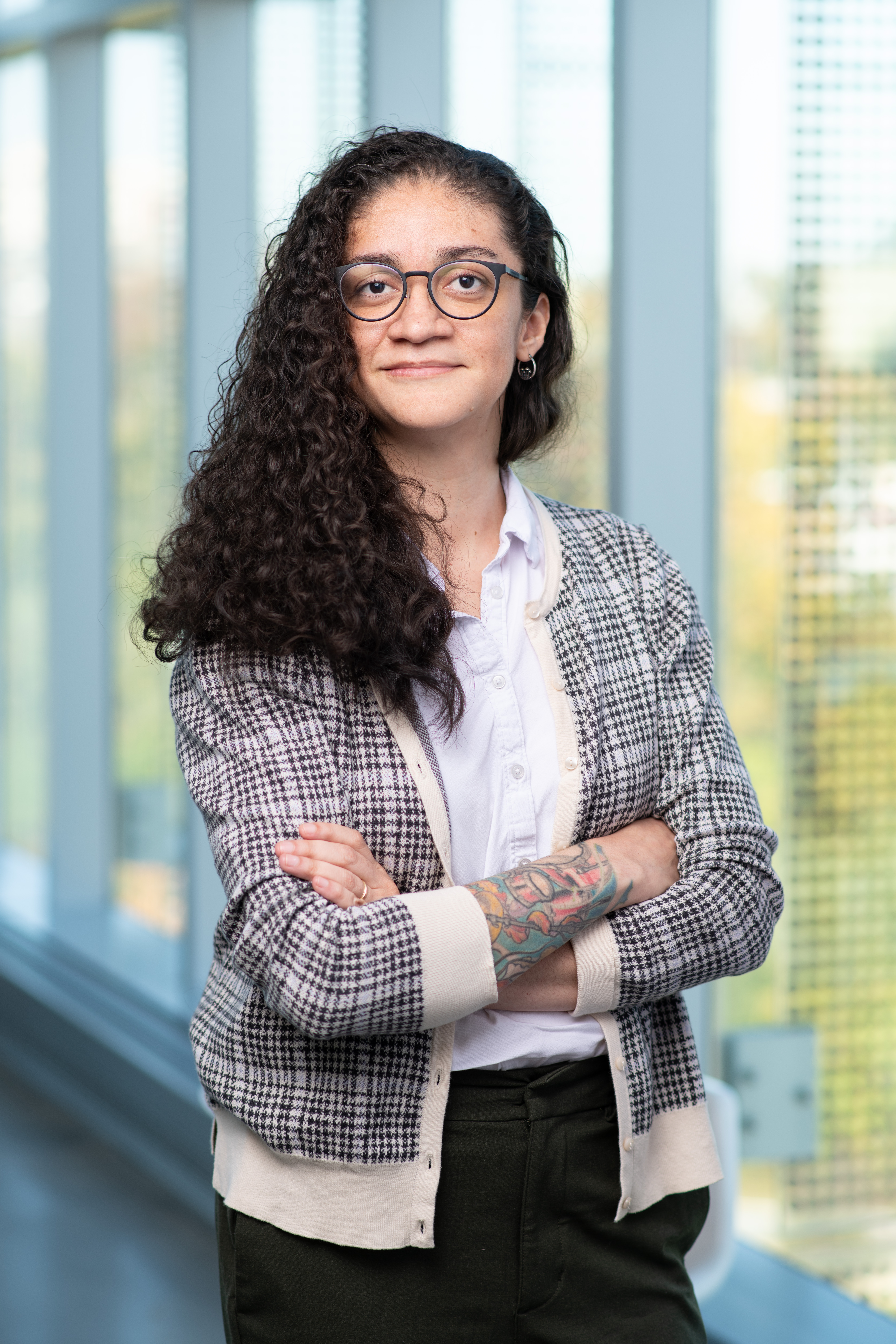
Cascante-Bonilla was drawn to Stony Brook because of the opportunities for interdisciplinary work, and looks forward to building a research program around compositional reasoning in AI systems that leverage both vision and language. A central goal of hers is to understand how to design deep learning models that can reason about objects, humans, and their interactions under physical, social, and cultural constraints, and to evaluate these systems in a trustworthy way.
“My work focuses on compositional reasoning, and I explicitly aim to build vision and language models that are trustworthy and robust,” said Cascante-Bonilla. “The department and the university’s AI Institute provide a strong environment for this type of research, with an organizational culture that encourages collaboration not only across different computational core areas within Computer Science, but also with other departments across campus. Stony Brook also has a vibrant and diverse student body, and I was drawn to the opportunity to work closely with such a community through teaching, mentoring, and collaborative research.”
Her current group's research is focused on egocentric videos and 3D scenes: they work with spatiotemporal data to study how people form social groups, move, and interact in everyday settings. At the same time, they design and evaluate 3D scenes and virtual environments, where objects, layouts, and agents must satisfy physical and semantic constraints. They hope to understand when vision and language models are truly reasoning about structure and context versus simply pattern-matching.
Cascante-Bonilla welcomes prospective and current students, as well as collaborators interested in multi-modal learning, who have a deep curiosity about how AI systems behave in complex environments.
Akshat Dave
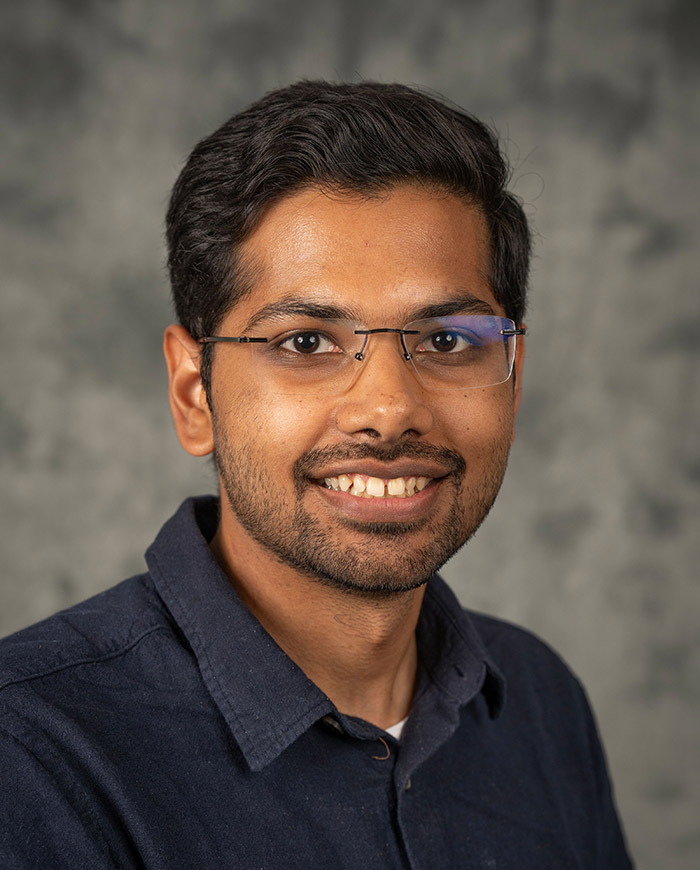
Drawn to Stony Brook by its strong culture of collaboration and its deep, multidisciplinary connections across campus, Dave looks forward to building a research program centered on pushing the boundaries of what machines can perceive. He was particularly excited by the department’s supportive environment and the university’s commitment to ambitious, long-term research—reflected in initiatives such as the AI Innovation Institute—which align closely with his own vision for advancing computational imaging and AI.
“My work aims to enable machines that can see what humans cannot: around obstacles, inside the body, and beyond the limits of conventional sensing,” said Dave. “Stony Brook offers an exceptional environment for this kind of research, with faculty and staff who are deeply invested in the department’s growth and a university-wide culture that encourages interdisciplinary collaboration. I’m especially eager to work with students and colleagues across engineering, physics, and medicine to build a community known for pioneering ‘superhuman vision’ technologies.”
His new Photon Intelligence Lab brings together researchers in imaging, graphics, AI, and robotics to design vision systems that surpass human perception. The group integrates computational cameras, light-transport simulation, and physics-aware machine learning to create systems capable of seeing around blind corners, transforming objects into computational mirrors, and turning cameras into sensors that can infer forces—capabilities that open the door to advances in autonomous navigation, noninvasive biomedical imaging, and scientific discovery.
He welcomes prospective and current students, as well as collaborators interested in computational imaging, AI, and robotics, who are motivated by the challenge of building machines that extend human vision and enhance safety in complex real-world environments.
Tuhin Chakrabarty
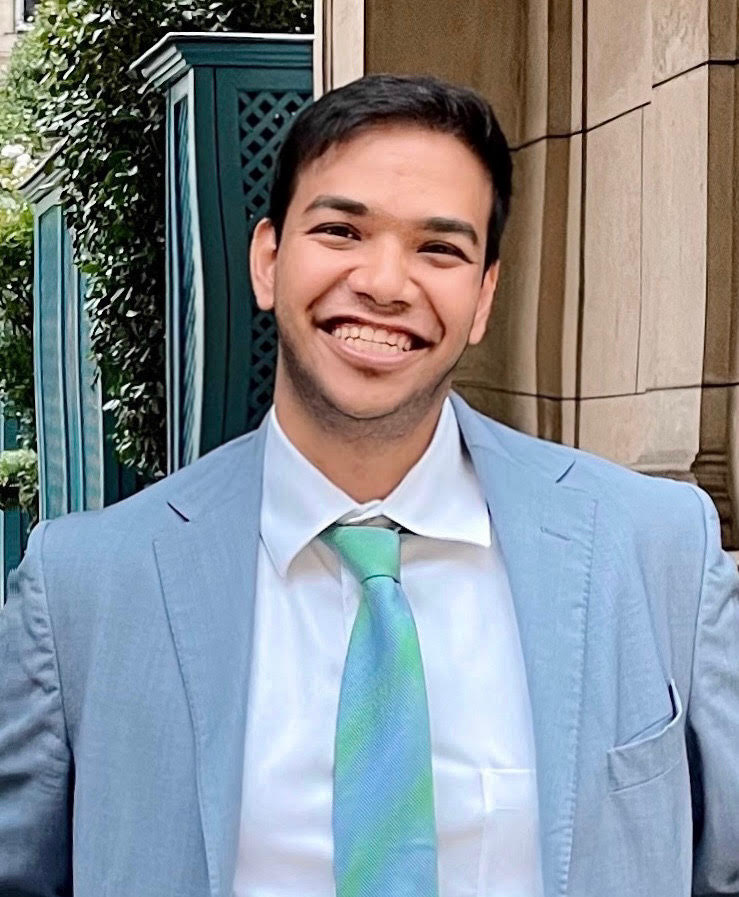
Chakrabarty is building a research program focused on designing AI systems that can genuinely understand and collaborate with people. His work spans AI, natural language processing, and human–AI interaction, and centers on creating reliable systems capable of handling implicature and ambiguity, interpreting human behavior, and aligning with the expectations people bring to technology. He often draws on knowledge and methods from multiple disciplines to address complex questions that cannot be fully solved within the boundaries of Computer Science alone.
“My goal is to build AI systems that are aligned with human needs and capable of navigating the nuance inherent in human communication,” he said. “I’m excited to work with students and colleagues who are passionate about understanding how we evaluate, explain, and design AI systems that interact meaningfully with people.”
His current research explores several interconnected directions, including designing better approaches to evaluating long-form text generation by integrating insights from computer science, design, and the humanities. He also investigates reasoning and explainability in both language and vision models, and studies how to elicit reliable human feedback to improve alignment in complex tasks. Additional threads of his work focus on developing strategies for more effective human–AI collaboration and on understanding the impact of generative AI on skilled labor markets, including how automation reshapes professional work and the long-term implications for labor.
He welcomes prospective and current students, as well as visiting researchers and collaborators interested in AI, NLP, and human–AI interaction—particularly those motivated by the challenge of building systems that reason more clearly, collaborate more effectively, and remain deeply aligned with human values.
“I’m pleased to welcome Paola, Akshat, and Tuhin to our team,” said Samir Das, professor and chair of the Department of Computer Science. “Their expertise will not only support our current research and provide opportunities for our students to work with some of today’s most relevant technologies, it will expand our department’s capacity to tackle some of the most pressing challenges in computer science. We look forward to the innovative contributions they will bring, both to our academic community and to the broader tech industry.”
Together, these new faculty bring fresh perspectives, ambitious research visions, and a deep commitment to collaborative, human-centered innovation. Their work will play a key role in shaping the future of the department and in expanding Stony Brook’s impact across AI, computing, and beyond.